Showing posts with label spell work. Show all posts

Monday, February 14, 2022

Prosperity/ WEALTH Bowl: Background and How to Prepare One

Prosperity bowls, Wealth bowls, or Money Jars are basically containers that are filled with items or charms that are associated with attracting material abundance into one's life. Although this practice is commonly found in Buddhist households and establishments, it is not exclusive to only one Asian religion and culture; the practice of preparing wealth bowls is actually one tied to metaphysical principles (Feng Shui) and cultural superstitious beliefs on positive manifestations. 

Estimated Reading time: 7-8 min

CONTENTS:

I. Common Forms of Wealth Bowl
    1.1 Fruit Bowl
        1.1.2 Unlucky numbers
    1.2. Ingot Bowl
    1.3. Classic Wealth Bowl

II. How to Prepare Your Own Bowl
    2.1 Items to be put in the bowl
    2.1.2 Additional items for customizing your bowl
    2.2 Choosing and Preparing the bowl

III. Where to Place Your Wealth Bowls

IV. Blogger's take (Actual Example from Recycled Jar)


I. COMMON FORMS OF WEALTH BOWL

1.1 FRUIT BOWL:

Here's something that is considered a "wealth bowl" in a figurative sense, but is technically NOT one: The Celebratory Fruit Bowl table centerpiece. For many Asians who practice Feng Shui, preparing a fruit bowl isn't just about putting together your favorite fruits in the middle of the dining table as an edible and healthy centerpiece. It is also done to invite abundance into the home. Especially during special occasions-- New Year, birthdays, festivals, a certain number and type of fruits are put together in one bowl or basket to bring luck into the celebration, and hopefully, for the whole year, starting the day of the occasion.  Round fruits are generally considered lucky. Thus, oranges are usually staples in the lucky fruit bowl. 

The quantity for each type of fruit placed in one bowl are commonly 1,2,3,8, and 10. Some households who are not fixed on following traditional Feng Shui will overlook the numbers and fit in as many fruits as they can based on their preference, but the numbers 4 and 13 are still often avoided. 

The Unlucky numbers:

  • Four: 四 (four) and 死 (radical for "death") are both pronounced as "si" in Chinese and many Chinese-influenced languages, so the number is often avoided in establishments and households  that are heavy on observing Chinese superstitions. 
  • Thirteen: Not all Asian cultures see 13 as an unlucky number. However, countries that are heavy on Western superstitions and religious influences tend to avoid it. This may be because of the biblical association with the "Last Supper"; "In the Bible, Judas Iscariot, the 13th guest to arrive at the Last Supper, is the person who betrays Jesus. Meanwhile ancient Norse lore holds that evil and turmoil were first introduced in the world by the appearance of the treacherous and mischievous god Loki at a dinner party in Valhalla. He was the 13th guest, upsetting the balance of the 12 gods already in attendance." (History.com, Maranzani, 2021)

As a child, I have heard the elderly avoid both 4 and 13. They never really explained to me why the two numbers were considered unlucky. And whenever I asked, they will just tell me that it's a superstitious belief passed down to them by their own elders. Many of them, regardless of religion, observed the practice of dreading and avoiding the numbers like a plague.

As I grew up, I have noticed both numbers be avoided in different building floors in both Asian and Western establishments. Elevator buttons would skip on either 4 or 13. I remember a hotel in HongKong avoiding both. Their building could have a total of 23 floors, but have 1-25 on the buttons with 4 and 13 being absent on the dial pad. 

1.2. INGOT BOWL:

Have you seen those boat-looking gold pieces in Oriental-themed houses and Buddhist temples? These Chinese ingot called "yuan bao" (元宝) was once used as an actual currency until the Qing Dynasty in China. Over the years, the imagery of the boat-shaped Chinese nuggets remained, and was passed down for generations as a symbol of prosperity. The shape would be printed on stickers, carved out from crystals, manufactured from plastic, or cut out on colored papers for decoration during New Year celebrations to invite money to come in. It would also often be placed by an altar, a designated "wealth" corner, or by the cashier section in some business establishments.
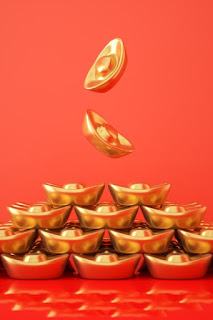
More time has passed and FengShui item shops and ingot decoration manufacturers became more creative; they started making ingot-shaped containers with a lid on them (even I don't know when this became a trend). Just like the decorative imitations, the ingot bowls are commonly made of plastic (and painted in gold or silver), or of brass, while others are made from carved quartz crystals such as citrine. People would buy it, fill it with items associated with abundance, and then place it in the "wealth" corner of their homes and buildings.

1.3. Classic Prosperity Bowl:

A prosperity bowl can be made of wood, glass, clay, or porcelain. It often does not have lid, and is just any type of bowl  that has coins and sometimes rice grains in it.


II. HOW TO PREPARE YOUR OWN WEALTH BOWL


2.1 Prepare items you would like to place in your prosperity/wealth bowl:

  • Rice Grains- Associated with bountiful harvest and being well-fed. A spoonful of rice grains is fine (UNCOOKED, okay? Don't go fermenting cooked rice in that bowl. This isn't a blog post on mold/bacteria-culturing or sake-making)
*Note: Please don't feel obliged to include this ingredient in your prosperity bowl if you don't feel comfortable about it (I understand that in some households, this may be seen as an act of wasting food). Only do this if you can afford to spare some grains and are fine with incorporating food into your craft/ manifestation tools.
  • Coins- It doesn't have to be old Chinese coins; you can use loose change or old coins of whatever currency is available to you. 
  • Crystals/Gemstones- I recommend putting in once that are associated with abundance and business, such as jade, pyrite, garnet, tiger's eye, aventurine, and/or citrine.
2.1.2 Additional items to further personalize your Wealth Bowl:
  • Charms associated with Prosperity and Abundance- this can be those little charms in the shape of coins, currency symbols, or even little, loose pieces of beads (such as pearls or random crystals you no longer use) from your trinket stash which you associate with looking and feeling more "luxurious".
  • Image or little icon of deity or guardian associated with wealth- You can include a small picture or carved amulet piece of any deity, guardian, or saint which your religion or craft associates with wealth. 
  • A wealth mantra- you can write a mantra inviting abundance into your life on a piece of paper and fold it.
2.2 Prepare your bowl/jar:
  • You can use a bowl/jar made of plastic, porcelain, brass, or whatever material you have in mind. But remember that the more durable and weather-proof it is, the better. The container symbolizes what holds and will catch your wealth. It has to be able to withstand different environmental conditions.
  • You can buy or use any available bowl or jar to your liking. If you have the time and money to spare, you can even find traditional wealth bowls with zodiac animal prints or mantra carvings on them. If you're feeling crafty, you can get a jar or a bowl and redecorate it as you see fit.
  • Make sure the bowl or jar is completely empty and clean. If you decide to recycle old product containers, remove any sticker labels. You can also repaint it with your favorite color or any lucky color associated with money and riches (gold, silver, or green).
***Recommended but not mandatory: 
  • Use a container with a lid. Closing the bowl/jar secures its contents from spilling or being grabbed by someone else-- both in a literal and figurative sense.
  • Smudge or smoke-cleanse your jar before filling it.
III. WHERE TO PLACE YOUR WEALTH BOWLS

3.1 General rules
  • Place in a well-lit area
  • Avoid placing in spots next to doors or windows; you don't want your wealth "escaping" or getting sucked out by these big holes.
  • Make sure there's a wall or a fence protecting one side of the bowl if you can't avoid placing it in open spaces next to large windows.
  • Keep the are clutter-free at all times; treat it like a sacred space for gathering "Wealth energy"
3.2 "Feng Shui" Placements
  • Simple placement: You may place your wealth bowl in the "Wealth Corner"; find the farthest left corner of the room across where the entrance door is located-- that's the simplified way of locating it. 
  • Specific placement: For a more specific directional guidance, you may try referring to "Bagua maps" online (I'm in no way associated with this website, but I do find this guide very simple and helpful).


IV. My own take: 

I emptied a jar of expired moisturizer. I washed it three times, and made sure no oily residue was left. I removed the label and repainted it in five layers of metallic gold acrylic paint (both inside and outside, as seen on the photo above). I was feeling a little fancy, so once the final coat of gold paint had dried, I decided to get my little decorative stamping roller, coated it in white acrylic, and then rolled it on the sides of the jar. I painted on the lid as well, just because.

I then placed a handful of old rice grains into the jar (had to make sure it was free from weevil 😖). I grabbed a few loose coins from my travels and placed it on top of the rice grains. And then on top of that, I took out bits of crystals I no longer use: Lapis lazuli and clear quartz for making intuitive and clear decision-making, turquoise for calmness, and garnet and jade for attracting material abundance. Lastly, I added a red string as a form of protection from negative energies, as well as to attract the right connections in my business pursuits.

I prayed over it, closed the lid tightly, and then I placed it in my designated altar/wealth corner. Here's what my jar looks like up close :)


I recommend looking up different ways of decorating wealth bowls online (and your nearest Asian lucky charms store if you have one available in your area). If you've never seen or tried making a Wealth bowl before, you'd be surprised how creative you can get with it :) 

Friday, December 31, 2021

Spell Work: Making "BLUE" SALT for Manifesting and Protecting Peace

So you might have already heard of using salt for different types of rituals and spell work. Salt, used for cleansing negative energies, has been used in different cultures and religious practices for "banishing" of and protection from all sorts of evil. And even without the superstitious and spiritual associations, salt remains highly relied on by people all over the world for culinary and medical purposes.


You've heard of using "sea salt", even "pink salt". Both occur naturally in nature. Sea salt obviously comes from, generally speaking, the sea. Pink salt's name is actually "Himalayan Sea Salt", and from the name itself, comes from Himalayan origins (although both types can be modified and created these days through artificial means). If you're familiar with using salt for spell work and other spiritual practices (or  perhaps you're just a naturally culinary and cultural savvy fellow), there's a chance that you've also heard of "black salt"-- salt mixed mainly with charcoaled materials. But what's not often spoken about is "Blue salt".

Matey, just tell me what the fuck is "Blue Salt"

Aight. Getting to the point, "Blue Salt" actually exists. The 'real' blue salt is called "Persian Blue Salt", and from the name itself, hales from somewhere in the Persian region (Northern Iran) source: https://guide.michelin.com. In the context of spell work, however, it is basically just salt colored in blue through organic or inorganic means, with the intention of creating a 'tool' against evil eye and protecting one's 'peace'. Blue salt is also associated with healing. 

Technically speaking, when it comes to salt magic, all salts are used with the intention to repel negative energies (spirits, even). So I'd like to focus more on the specific aspect of 'Protecting and Manifesting Peace'.

If you have access to Persian Blue Salt, you may use that one, too. But if not, you may create your own. What matters most is to remember your intentions behind creating it.

Dyeing in Blue

  • Natural Pigments: The blue pigments may be derived from natural sources such as flowers and herbs. Some people use dried blue flowers by crushing them into powder. 
  • Kitchen Ingredients: Berries (crushed), Tea (brewed into a strong concentrated amount) or Food Coloring.
  • Other Sources of Pigments: Ink, watercolor, oil paint, and pretty much any other types of paint (highly recommended for artists and those who work closely with creative crafts. Especially those who use art as a form of emotional and psychological therapy). Just be mindful that the salt's consistency and moisture will be affected depending on the type of paint you choose to use. If you use acrylic paint, latex, or even nail polish, it will help to use the odorless variety. Also, take note that those types of paints will basically "coat" your salt granules instead of soaking them through. They leave a rubbery film that may stick to your jars/bottles.

You can mix more than one source of  blue pigment to dye your salt. If you feel that you don't have enough flowers to turn your salt blue, or if using berries give you a color too dark for your liking, don't hesitate to make adjustments in your dyeing process. 

Additional Ingredients --Not a must, but if you have the time, I highly recommend it. 

(*Belief and Focused Intention are the main tools of the person writing in this blog, so expect to read a lot of recommended 'personalization' tips and a lack of 'fixed reference' on any religious or spiritual school/principles :) )

To further personalize your Blue Salt/ "Peace Jar", you may add things that you personally associate with peace and calmness. Feel free to throw in bits and bobs that bring you a sense of security and joy. Remember, the whole point of making the Blue Salt is to manifest and protect your Peace as well as your emotional (and perhaps, spiritual) healing. Here are a few suggestions:

  • Flowers: You can add blue flowers for more color (and even aesthetics if you have any plans of adding the jar as a form of decoration, too). Butterfly pea, hydrangeas, lavender, delphinium--you name it. Feel free to top the salt with non-blue flower petals, too. I recommend adding in preserved or dried flowers so you don't have to worry about any insects which the decomposing process may attract (plus the decomposition may affect the salt's color, too even if you choose to shut your bottle tightly with a lid).
  • Herbs: Oregano, rosemary, sage, basil... You can mix in more than one type of herb in your blue salt, if you'd like. Aside from symbolic associations, the herbs can also add a pleasant smell to your concoction.
  • Essential oils: Essential oils make great addition to your Blue Salt if you choose to seal your jar with a permeable material, such as mesh cloth or gauze. Although it's not practical if you have a limited supply of essential oil (if you're working on a budget, the good quality ones can be expensive, especially for the younger spell casters), or if you are choosing to tightly shut your jar with an airtight lid (I mean, who's gonna smell that). But hey, it's your jar, so go knock yourself out with your customizations as long as it makes you happy and it's not going to trigger anybody's allergies. 
  • Crystals: You can mix in bits of your favorite crystals, or even excess crystals from old trinkets and broken bracelets. It's a plus if you use ones that are associated with peace and tranquility (such as amethyst, blue aventurine, sodalite, or turquoise).
  • Charms: If you are going to mix in other objects, it would be ideal to put in ones that are made of glass or plastic materials. You can use metal charms, too. But please be mindful that metals will rust overtime. And with salt as your main ingredient, the corrosion process will speed up.
  • Written Prayers or Sigils: Cut a piece of paper, write your intentions for calling in peace or washing away tumultuous energies. If you have a sigil or any guides you draw inner strength from, write their name or symbol in that small piece of paper, too. You can fold the paper and bury them in your blue salt.
The Final Step: Sealing

It is a common practice for spell casters to seal their spell jars on the lid with wax by dripping a candle around it; make sure that you close the jar or bottle tightly with a lid before doing this. If your chosen container doesn't have a lid (or if you're using a recycled bottle and the lid/cap has long gotten lost), feel free to use other materials such as cork board pieces or even cut out coasters. Please note that you can't use sheets of soft and thin plastic materials as a substitute lid if you will be using hot wax to seal your jar. The heat will melt thin plastic sheets.

Non-traditional ways to seal your Salt Jar: You can use a cloth, a piece of stainless screen (the fine ones with very small holes), or gauze to close your jar/ bottle. If you don't want to use candle wax, you may tightly seal it with a ribbon, a thread or even a twine. Or just leave your Blue salt concoction open in a bowl, or store them in any accessible container; that way, you can also use it for sprinkling in certain areas of your home. You can then make it a part of your anti-negativity and space blessing rituals.

Lastly, don't forget to pray over/ charge your blue salt with your intentions!


My take:

I used a mixture of brewed butterfly pea flower, watercolor, and mica pigments to dye the sea salt; the blue that came from my old stock of dried butterfly pea was too dark for my liking (it looked teal, even with a minimal amount used), so I decided to take some "blue" from my arts and crafts stash. I have this old stock of my favorite flower tea, golden edge rosebuds, and I decided to sprinkle them over my blue salt. I then put in a few loose turquoise beads and some of my favorite chipped crystals and gemstones into the mix.

I'm honestly not much of a candle user (plus the place I live in have sensitive smoke detectors-- goodbye to even attempting fire-scrying), so I decided not to use a spell candle. I used a red thread for sealing the jar instead. Not just because I like the color and think that it will make a great contrast to the coolness of the blue salt and the white cover, but also because the red thread is commonly used as a protective amulet, good luck charm, and a soul bond symbolism in many religions and culture (such as Hinduism, Buddhism, and Feng Shui).

Additional Recommendations:

Plain sea salt, pink salt, black salt, blue salt... Honestly, I recommend you to get creative because why not? Think of an intention, pick a color-- even mix colors, or layer them in accordance to your intentions and make your own salt jar when you find the time and have the energy for it :) 

Prosperity/ WEALTH Bowl: Background and How to Prepare One

Prosperity bowls, Wealth bowls, or Money Jars are basically containers that are filled with items or charms that are associated with attract...